


October 15th, 2026Gigs…
Stag & Hound, Arundel
Ocktoberfest, Saturday, October 17, 11.30am-10pm Nashville Road, Saturday, October 10, 8pm-11pm Line Dancing – every Wednesday, Thursday and Friday, from 6.30pm Catalina Restaurant & Bar, Broadwater Parklands
Sunset Session – Friday to Sunday Downtempo Chillout – Live Music, DJs, Saxophone, Vinyl Runaway Bay Tavern, Runaway Bay
Live Music – Fridays, 4pm – 7pm Hollywell Yacht Club, Hollywell
Live music – Every Friday evening Southport Yacht Club, Main Beach
Live music at the 4Shore Bar – Friday evenings & Sunday arvos Halloween Dance Party – Saturday, October 31, 4pm – 7.30pm – for kids and adults Southport Sharks, Southport
Runes – Friday, October 9, 8.30pm Clash of Keys – Saturday, October 10, 8.30pm Old Skool – Friday, October 16, 8.30pm Cars/Blondie – Saturday, October 17, 8.30pm Band X – Friday, October 23, 8.30pm Off the Grid – Saturday, October 24, 8.30pm Helensvale Tavern, Helensvale
Live music – Friday and Saturday nights from 8pm Club Helensvale, Helensvale
Live music duos – Friday and Saturday nights from 7.30pm Lounge soloists – Sunday afternoons from 2pm Mano’s Bar & Grill, Main Beach
Live Music – Friday & Saturday evenings with Gold Coast DJ Gaz DJ – Sunday evenings All gigs correct at publication but subject to change. Please check with the venues. Got a gig – email news@tlnews.com.au
October 15th, 2026Gwen Cooke: Cars, planes, fashion & giving back
The Jaguar XJ13 is a prototype racing car that was developed by Jaguar engineering director William Heynes to compete at Le Mans in the mid-1960s. It never raced, was crashed while being filmed for a Jaguar commercial, and only one was produced.
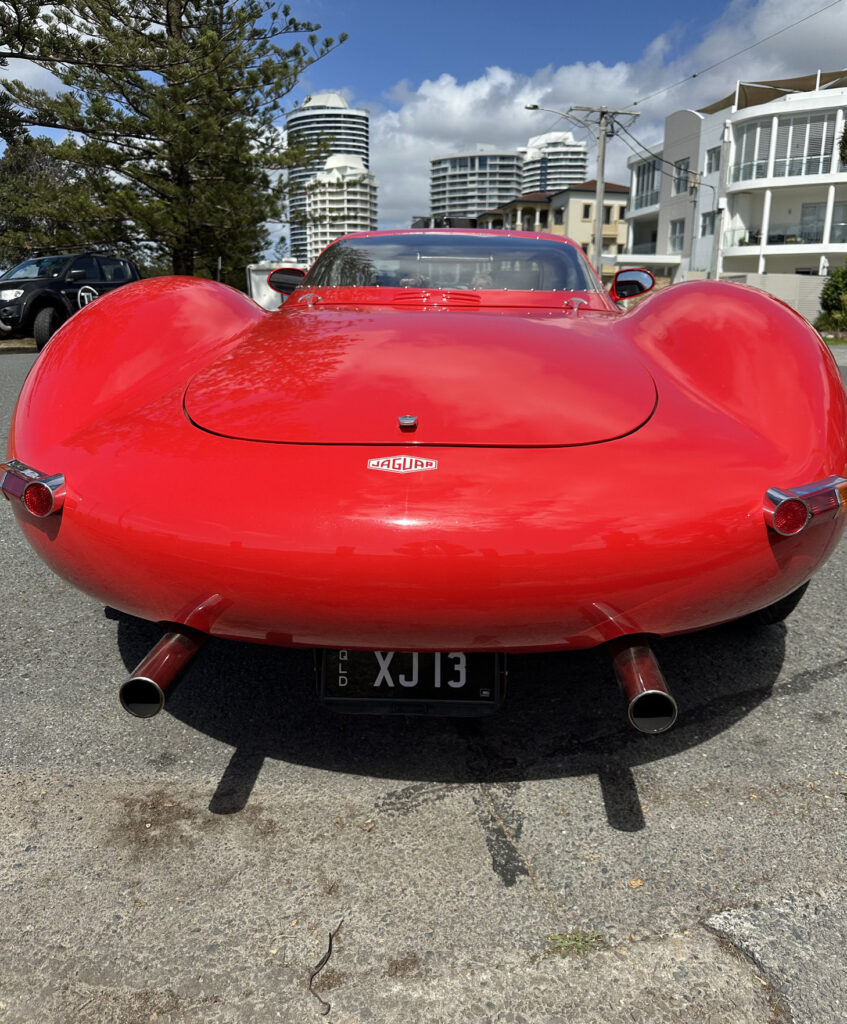
That’s according to Wikipedia but if you keep your eyes open on the Northern Gold Coast you might see one more – a red replica, not the original racing green. The car’s owner is Gwen Cooke, who, in her eighties, still takes it out for a spin now and again. Last week it was in Oatland Parade, Runaway Bay for our photo shoot.
Gwen and her late husband Digby were always car enthusiasts. The Jaguar took nine years to build from a 1:18 model with the original now on display in a car museum in Coventry, England.
“We tried to get a full aluminium chassis, but it was all too difficult with the technology. It’s fully road registered and we did its tests for compliance on the airstrip at Coombabah. The moulds and technology for the build went to America where I believe they are now producing them.”
Gwen got started with her own car history when she bought an Alfa Romeo 1750 in 1968 and the only person who would insure it was Digby Cooke Insurances – because Gwen was in her 20s. “From there, I had a 2.7 Porsche, an XJ ute, a F100, a Fiat 1500, 124, Fiat Sports Coupe and many, many other cars. Digby’s cars included a Ferrari 550 Barchetta, a Porsche 996 GT3 911 and a Robnell Cobra which was personally tuned by Bo and Glenn Seton. Digby and I were just friends for many years. I was widowed in 1966 when the father of my children, then three and five, was killed in Vietnam. He took the first intake of National Service trainees to Vietnam, and he was only there six weeks. It’s 60 years ago this year.”
Gwen said her passion for cars went back to a farm near Liverpool Station, out of Sydney. “My uncle owned the farm, and he had a very old truck with planks of wood in the back. My job was to stand on the back of it when we went around the farm and watch the gauge at the front to see when it went into the red. I loved it. My uncle was also an interstate hauler, and he’d bring these wonderful trucks home and they were always really, to me as a kid, just fast. My parents bought one of the first Vanguard estate cars and then they had old Fords and all sorts of things.
“My family has always been into cars, and I did club racing and Digby and I did lots of races like Speed on Tweed and the Muscle Car Masters. We even went to about every racetrack around doing laps and things. I don’t worry about speed, but you have to learn your limitations – with some of my grandchildren I paid for them to go to Norwell Motorplex or to the Sydney Raceway to have driver training so they know how to control a car.”
Friends over the years included Peter Brock and Jack Brabham and obviously The Mountain at Bathurst was a well visited spot. “Digby actually broke his back at Bathurst – he and Peter had been complaining the cars weren’t travelling well.”
Gwen and Digby’s friendship turned to living together for 16 years and then finally tying the knot in the 90s in the Blue Mountains. “Digby was a real character, but they all were, and I still see them all. We have a Legends’ Reunion and drivers from all over Australia come to that. I think we had 150 at the last one we held. We also have another dinner reunion which raises money for the ministry – people who come to the meets and look after everyone if there is, well, an adverse happening.”
Aside from cars, Gwen is also very much into fashion and marketing, owning her own company and also working as a senior executive with David Jones. (Her huge walk-in robe is reminiscent of a scene from Sex and the City.) She also helped Digby with his business interests including insurance broking and the building industry.
Gwen had a home on the Sunshine Coast and a place in Sydney and when she and Digby got together, he had a building of flats in Wollstonecraft – and the top floor became their penthouse.
“In 1995 we bought our first unit here on the Gold Coast and then we diversified and sold the Wollstonecraft building to a developer. It was an Art Deco building, and it was very hard to get to build the penthouse on the top – North Sydney Council were a little hard to deal with.”
Gwen now lives in Runaway Bay and is very involved in giving back to the community.
“I’m a member of the RSL and helped start the Defence Member and Family Helpline. I also worked at Victoria Barracks and went toe-to-toe with Veterans Affairs for many years getting a fair deal on ComSuper. I see a lot of the boys (Vietnam veterans). I call them boys – they all turned 80 last year – but they are younger than I am. I also go to a VIEW Club (Voice, Interests and Education of Women) which was started by a man to keep his wife happy, and we have 18 Learning for Life children. We pay for all their expenses to get them an education. I also belong to Probus, a group of retired and semi-retired businesspeople.”
Gwen said she had been asked to run for politics but decided she could do more from the outside.
“I was on the Mayor’s Charity Fund in North Sydney, but unfortunately my son had an accident in a creative leisure centre which was owned by North Sydney Council. He had acquired brain damage from that accident when he was just 14. He passed away in March this year – didn’t make it to his 65th birthday.
“I have to look at it from the view that his life was really tough and now he’s with his dad and they are getting to know each other.”
Boating has been another love, with Digby and Gwen owning a 43-foot Mariner which they took up to Hamilton Island for Race Week. “When I was younger, I would also go out on the boats as ballast for the boys when they were getting ready for the race to Tasmania. And we got flown out by helicopter once through the Hydrographer’s Passage and dropped onto a boat to drop off the pilot to bring people through the reef.”
Gwen is also working with another charity called Dress to Succeed, to help people looking for work to look the part. Once a location is settled, there will be more on that to come.
“I was married at 18 and a mother at 19 and then a widow at almost 24. I decided I wasn’t going to sit there and feel sorry for myself. Now I’m in a position, I try to give back to and make sure that people are OK.”
Words: Donna Kelly | Images: Kyle Barnes

October 15th, 2026Catalina Restaurant & Bar
Catalina Restaurant & Bar has one of the best views around, with diners able to sit back and enjoy the glistening Broadwater while feasting on some of the best seafood around – with much more on offer.
Owner Charlie Whitcombe is someone who used to be described as “a man of the world” -raised in Dunedin, New Zealand and having worked in a host of roles around both his former home and Australia. He’s been a professional fisherman, jumped onto oil rigs and is now at home in hospitality with a great team behind him. He’s old school and knows what works.
We headed to Catalina on a Wednesday for lunch. The day was heating up but there was a lovely cool breeze, and plenty of people – from couples and families, to workplace friends -were enjoying this fantastic dining spot.
Staffer Nick showed us to our restaurant table with menus and specials at the ready. There are two dining areas – the restaurant and the more casual cafe. Both are well staffed with plenty of smiles – so you know these guys are happy campers.
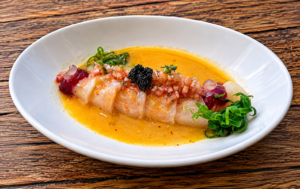
The menu is perfect, not too long but not so short you are looking for other options. As I said seafood seemed like the right choice, looking out over the water, so we decided to share a Kingfish carpaccio with a mandarin miso reduction and black tobiko ($33) and the Scallop Croquettes with chives and hollandaise ($29). (I lived in Japan for three years in my 20s but only learnt now that tobiko is the Japanese word for flying fish roe.)
Both were amazing. The carpaccio was melt-in-your-mouth delicious and the mix of mandarin, miso and fish row was exquisite – we loved this dish and would have it over and over. Charlie told me later the kingfish was hung for a week before it was served. Amazing.
The croquettes, you get three, were a really generous size, full of scallops and creamy potato with a crisp crumb and wonderful sauce for dipping. A great start to the meal. Oh, I was enjoying a glass of Catalina Sounds Sound of White chardonnay from the Marlborough Sounds in New Zealand ($18). This is a really full-bodied chardy with beautiful oaky flavours – perfect for old-fashioned wine drinkers like me. Kyle opted for a ginger beer. Boring.
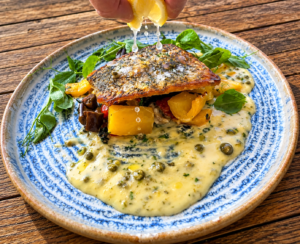
We deliberated over the mains and I finally chose the NT Wild Caught Grilled Barramundi with warm caponata, and a lemon and caper beurre blanc ($48). This was a stand-out. A really decent piece of fish, perfectly prepared and sitting on loads of added flavour. Coming from the Northern Territory was just an added bonus.
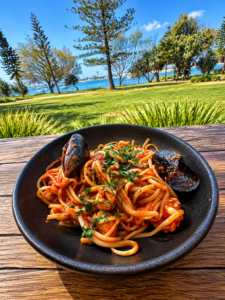
Kyle chose the Marinara Linguine with prawns, mussels, scallops, NZ clams and barra in a rich Napoli sauce ($48). Again, a fantastic seafood dish teeming with a bit of everything and all coming together in a flavoursome sauce. Whoever is in the kitchen is very good.
Of course, there are plenty of other choices. Burgers, poke bowls, salads, bao buns, steaks, tacos. It’s a cliché but there really is something for everyone.
Catalina is also open for breakfast and dinner and there is also live sunset music, Friday to Sunday, if you prefer just a drink while soaking in that view. And the drinks list is huge. Wines, beers, margaritas, cocktails, mocktails, tequilas…
Jump online for a look or just head to the Broadwater Parklands. Say hi to Charlie.

October 12th, 2026Hart of the Northern Gold Coast
Artist David Hart has had a tough year, to say the least.
First, he lost his beloved mother Raylee in March, then his daughter Chloe faced life-threatening heart issues, at the age of just 31. All while he and wife Christine navigated the huge move from Brisbane to the Northern Gold Coast. But, with Chloe on the mend, he has, as you do, kept going and his three-storey Main Beach Gallery is open for business. Down the road a little, he has a large studio, where he works most days. And that’s where we met for a chat.
Donna: You grew up in Broken Hill. David: I was there from obviously age zero right through until I was 21. And then moved to Brisbane and probably spent about a good seven years on the north side. That’s where I got started with my painting – more to create a living. Prior to that I’d been painting since I was 16 in Broken Hill. People ask me where I learnt to paint but I never had an art lesson – technically my whole life was an art lesson. I would walk in and Dad (Pro Hart) would be putting some trees in a painting or painting a building or putting the sky in. So over time you learn the order of things, how to work your way out of a painting. I taught myself my own colour mixing and a lot of these were outback type paintings. They’re all in a totally different format to how Dad used to paint. He painted a lot with oils and a very different technique where he would put the oil on and then use turps and little rags and tissues to kind of lift the paint off, to create marks and whatnot. With mine it’s lots of different stains and all acrylics and water-based paints.
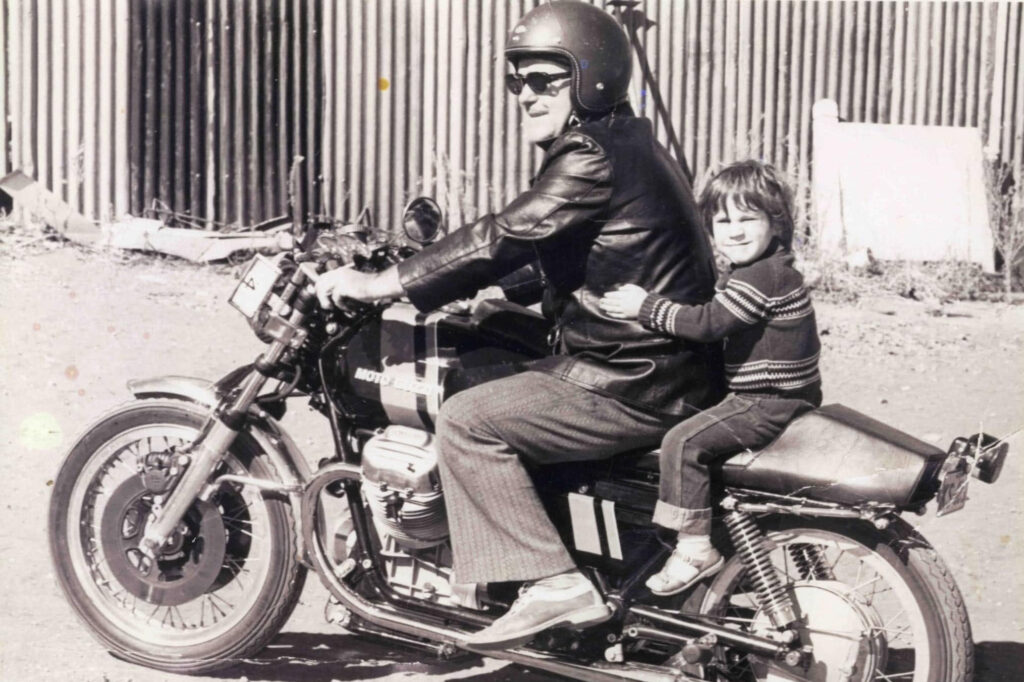
Donna: What was it like growing up in such a remote area? David: It was great. We lived right on the edge of town and you could push your motorbike a couple of blocks down the road, kick start your bike and take off into the bush. I’d come home from school, make a sandwich and one of my mates would come over and we’d just go riding until the sun went down. Dad also created opportunities for you to have a crack at things – like welding. I’ve still got some of my old sculptures I did when I was eight or nine. He had this massive scrap metal pile down in the backyard and we would go scavenging through it and find all these interesting parts. I was too young to use the welder, so I had to talk Dad into coming out and helping me while I held things together. He got so sick of getting interrupted he taught me how to weld and use grinders when I was 10. We had lots of interesting opportunities – sculpture and clay and enamelling. He was a good dad. You just had to know how to handle him. He wasn’t the sort of dad who would come and kick a football with you.
Donna: What about your mum Raylee – was she an artist? David: No, but Dad couldn’t have done what he did without her. Mum was very good at looking after all the visitors that came and when I say visitors, it could have been the Premier of New South Wales, it could have been the Police Superintendent from New South Wales. They came to Broken Hill and then people would say ‘oh, you’ve got to go up to the gallery and see Pro’. And if he didn’t have Mum, he just wouldn’t have had time to paint. She added to what he was able to build and create over his lifetime, but in a different way. She never had an education, but she could sit down with anyone and make them feel like they were the next-door neighbour and make them feel welcome.
Donna: Brisbane must have been a bit of a culture shock? David: Yes, it was but it was good because we were able to hold exhibitions there – and there were more people to attend. That’s really where my art started to take off. Then we went from Brisbane to the Sunshine Coast. And that’s where we had our first gallery, like a first kind of really solid gallery, in Mooloolaba. We had a lot of good years there, with another gallery at Noosa, right up until probably the GFC (Global Financial Crisis) and that just smashed everybody because art is a luxury item. A painting is expendable income. We had to ask how can we still reach people and support our brand? I really like doing collaborations and we got in touch with Maxwell & Williams, and Max was happy to work together, and I was an artist for those guys for quite a few years. I did a massive mural for the London Olympics with Cathy Freeman and Geoff Huegill where they sent time lapses of me painting it to the Olympic Village with hero messages. Max saw that and we ended up creating a lot of cups, mugs, placemats and platters which led to better relationships between business and art.
Donna: And now the move to the Northern Gold Coast? David: Yes, our kids had moved out of home and we went back to Brisbane and then we moved down here about eight weeks ago. We have the gallery in Tedder Avenue and we live in Main Beach as well.
Donna: What would you call your style of painting? David: I’m always just creating. I had this conversation with Christine yesterday because there’s styles that I paint that I’ve painted for 37 years. And then, every year I paint something a bit different. It’s like anything that you do, sometimes it’s good to put things aside for a while. Or maybe you don’t paint them again, or maybe they’re things you don’t paint very much anymore. A lot of artists only have the one style, and they paint the same sort of subject. That can probably get very tiring for them if they do it for a lifetime. I like to keep pushing the boundaries. I used a colour palette yesterday that I’ve never used in my lifetime. I created a painting from four colours and you push yourself to find the colours that you want to create, what you want to do. That gets you a bit more excited.
Donna: Do clients ever want something specific? Or just a painting? David: Some clients who have bought from us over the years will have something in mind that they want. They might love my outback work but want something bigger. I will create something that I get a feel for. I’m not one that, how should I put this; I don’t like it when people tell me how to paint the painting. I can’t do that because it’ll drive me nuts.
Donna: You’ve had a shit year. Do you paint dark when that happens? David: No, I just don’t paint. I’ll find something else to do. Some days you get up and you don’t feel like going to work. But I have to go to work because it is what I do every day. You just push past it and you can end up creating something good anyway. Or you might be low on energy and it’s just not your day. I don’t want to put myself into a canvas on those sort of days, so I’ll just do something else. Maybe stretch some canvases, build some new shapes and sizes. And when I am feeling good again the next day I throw up a canvas and get stuck into it again.
Donna: You have a great work ethic. But don’t people want to meet you at the gallery? David: Chris gets asked that a little bit and when I do go in, it’s always nice to meet people. The only reason I don’t go in very much is because I’m always here painting, working. And by the time I finish, the gallery’s closed.
*David will be at the launch of HartFinds The Collector’s Exhibition at David Hart Galleries in Tedder Avenue, Main Beach on Saturday, October 10 from 4pm to 6pm. Bubbles and refreshments, smart casual dress. RSVP to admin@hartfinds.com.au The exhibition runs until October 25.
Words: Donna Kelly | Images: Kyle Barnes Are you an artist we should be featuring? Know one? Email news@tlnews.com.au
October 12th, 2026Catalina Restaurant & Bar
Catalina Restaurant & Bar has one of the best views around, with diners able to sit back and enjoy the glistening Broadwater while feasting on some of the best seafood around – with much more on offer.
Owner Charlie Whitcombe is someone who used to be described as “a man of the world” -raised in Dunedin, New Zealand and having worked in a host of roles around both his former home and Australia. He’s been a professional fisherman, jumped onto oil rigs and is now at home in hospitality with a great team behind him. He’s old school and knows what works.
We headed to Catalina on a Wednesday for lunch. The day was heating up but there was a lovely cool breeze, and plenty of people – from couples and families, to workplace friends -were enjoying this fantastic dining spot.
Staffer Nick showed us to our restaurant table with menus and specials at the ready. There are two dining areas – the restaurant and the more casual cafe. Both are well staffed with plenty of smiles – so you know these guys are happy campers.
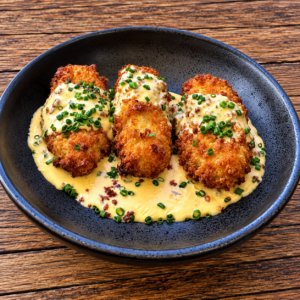
The menu is perfect, not too long but not so short you are looking for other options. As I said seafood seemed like the right choice, looking out over the water, so we decided to share a Kingfish carpaccio with a mandarin miso reduction and black tobiko ($33) and the Scallop Croquettes with chives and hollandaise ($29). (I lived in Japan for three years in my 20s but only learnt now that tobiko is the Japanese word for flying fish roe.)
Both were amazing. The carpaccio was melt-in-your-mouth delicious and the mix of mandarin, miso and fish row was exquisite – we loved this dish and would have it over and over. Charlie told me later the kingfish was hung for a week before it was served. Amazing.
The croquettes, you get three, were a really generous size, full of scallops and creamy potato with a crisp crumb and wonderful sauce for dipping. A great start to the meal. Oh, I was enjoying a glass of Catalina Sounds Sound of White chardonnay from the Marlborough Sounds in New Zealand ($18). This is a really full-bodied chardy with beautiful oaky flavours – perfect for old-fashioned wine drinkers like me. Kyle opted for a ginger beer. Boring.
We deliberated over the mains and I finally chose the NT Wild Caught Grilled Barramundi with warm caponata, and a lemon and caper beurre blanc ($48). This was a stand-out. A really decent piece of fish, perfectly prepared and sitting on loads of added flavour. Coming from the Northern Territory was just an added bonus.
Kyle chose the Marinara Linguine with prawns, mussels, scallops, NZ clams and barra in a rich Napoli sauce ($48). Again, a fantastic seafood dish teeming with a bit of everything and all coming together in a flavoursome sauce. Whoever is in the kitchen is very good.
Of course, there are plenty of other choices. Burgers, poke bowls, salads, bao buns, steaks, tacos. It’s a cliché but there really is something for everyone.
Catalina is also open for breakfast and dinner and there is also live sunset music, Friday to Sunday, if you prefer just a drink while soaking in that view. And the drinks list is huge. Wines, beers, margaritas, cocktails, mocktails, tequilas…
Jump online for a look or just head to the Broadwater Parklands. Say hi to Charlie.

October 8th, 2026Marina Mirage: The sails, the restaurants, the rebuild
There is a stretch of waterfront at Main Beach that most Gold Coasters know well, even if they haven’t thought about it much lately.
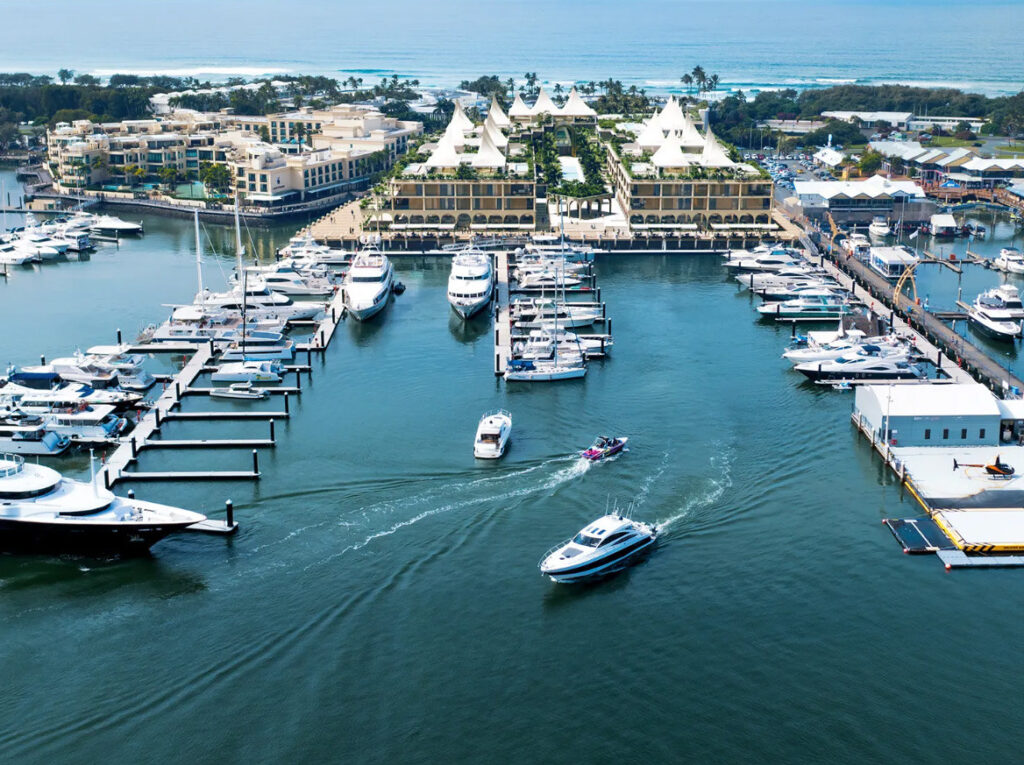
Marina Mirage. The sails. The restaurants. The kind of place that quietly anchored the northern end of the strip for decades, doing its job without making too much fuss about it. Well, it’s about to make a bit of fuss.
Chris Ferro, Marine Manager and Sales Manager for GC Marine, pictured inset, takes us on a walk around the site and the scale of what’s coming is genuinely impressive. “The Makris Group, who own the building and are developing the project, have a phrase they use for their vision: A new Australian Riviera.”
The luxury hotel, resort, wellness, retail, residences and a superyacht marina are all testament to the vision. The hotel component is a 126-room five-star Ritz Carlton, with penthouses rumoured to be going north of $30 million. The marina will carry 75 berths, with an additional extension wrapping around the helicopter tour area to accommodate even more large vessel berthing on the sea arm.
“This is a full knockdown rebuild, everything you currently see on the land side comes down, the car park, all the structure above ground and only nine new piles go into the earth. The bones of what Christopher Skase built originally are sound enough below ground, which is something, but above the waterline it all goes and construction starts in October,” Chris, who is optimistic about a three-year turnaround, says.
“One thing that is definitely staying,” and you can hear the relief in Chris’s voice when he mentions it, “is the sails, those iconic curved, white sails that have been a landmark on the Broadwater for as long as most of us can remember will make their reappearance in the new design”. Some things you just don’t mess with.
As part of the $500 million development Fraser & Partners took the design lead with interiors by Fiona Lynch Office and landscaping by Aspect Studios. Key features include a 50-metre pool, rough oyster shell renders, limestone finishes and bronze-framed detailing. The precinct integrates a 126-key Marriott Luxury Collection Resort, 38-ultra-luxury residences (villas and penthouses starting from $6.45m), chef-led dining and a wellness hub.
Chris says the waterside, importantly, will stay open throughout the entire redevelopment.
“Berth holders, restaurant-goers, anyone using the water side of the precinct will still have access. The La Luna Beach Club floating restaurant is still pumping out great food through the build. It’s the land side that gets boarded up while the work happens, with access to the water relocated to a different entry point.”
For a project of this size, keeping the marina operational throughout is no small logistical feat, and it’s clearly something the team has thought carefully about.
“In terms of what’s already there, the waterside marina was actually rebuilt by GC Marine five years ago, and those piles were put in at that time specifically to allow for the boardwalk extension that’s coming as part of the new development,” Chris says.
“That boardwalk is one of the features people keep talking about, and for good reason. It will run along Sea World Drive connecting the whole precinct and forms part of the master plan requirement for every development in the area to contribute to a continuous coastal walkway. When it’s done, it’s going to change the way people move along that stretch of the coast.”
Power is an interesting story. The marina is currently running off generator power on the land side while the development is being planned, with the intention of switching back to mains once construction begins. What the final power capacity looks like for superyacht berthing is still being worked through but Chris is clear that whatever the big boats need, the infrastructure will be there to meet it.
Given that Clive Palmer’s Australia yacht is currently berthed in the marina, they’re not exactly short of experience with vessels that have serious power requirements.
The ferry terminal, which I didn’t know was even there, is also getting a complete rebuild as part of the project.
I asked Chris about competition, given Mantaray Marina has just opened down the road. He was relaxed about it. “Everyone’s doing their own thing,” he said. “It’s not a competition, it’s a destination.” His, and the Makris Group’s view, is that the Gold Coast is becoming a cluster of world-class marine infrastructure rather than a collection of rivals. I guess a rising tide lifts all boats, as someone once said.
And the vision? “The most premium destination on the Gold Coast,” Chris says, without hesitation. “There’s nothing else like it.”
Looking at what’s coming, it’s hard to argue with him. Words: Kyle Barnes | Images: Contributed
October 8th, 2026Phuong Dang: The art of returning to yourself
“Over the years, I have come to understand that some of the most important things in life cannot be seen, only felt.
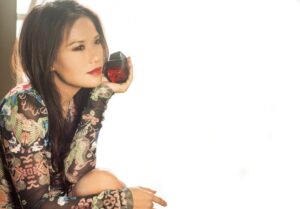
“We spend so much of our lives focused on the outside world — building, achieving, creating, caring for others — yet the quality of our lives is ultimately shaped by the inner states we return to most often each day. For me, scent has always been one of the most powerful ways to return to myself.
“Long before I understood why, I was drawn to the invisible language of fragrance. A single breath could bring back an intention, shift a feeling, soften a difficult moment, or reconnect me to something I had forgotten within myself. As an artist, I have always been fascinated by emotion, beauty and the human experience. Perfume became another medium through which I could explore these invisible worlds, transforming feeling into form, and creating experiences that speak beyond words.
“I work with some of the world’s most respected perfumers and the finest raw materials to create fragrances that are both beautiful and meaningful. Not simply exquisite scents to wear, but sensory rituals designed to accompany the moments that shape our lives. Each creation begins with a feeling. A state. A question about what it means to be fully alive, fully present and fully ourselves.”
The words above come from Phuong Dang’s book, offering a glimpse into the inner world of the artist and perfume founder. Who are these words for? Perhaps the world. Perhaps those curious to know the woman behind the fragrances, or those who already know and love her work.
Phuong is something of an enigma. She can be mysterious and a little cryptic, yet in person she is strikingly down-to-earth, with a hearty laugh and a thousand-watt smile. Serious, but fun. Strong, but surprisingly soft.
The Paradise Point resident, who turns 50 this year, grew up in Vietnam and left for London in her early 20s to step into the heady worlds of fine art and high fashion. It was exciting, glamorous and full of possibility. But beneath it all, she was still a very young woman, far from home, finding her feet in a life that was new to her.
Scent became part of how she found her bearings. Not simply for its beauty, but for what it could evoke and how quickly it could shift the way she felt. “A scent can transport us to a feeling, a moment or an intention, before we have time to explain it or the mind has caught up,” she says. “Throughout my life as an artist and creator, I have worked across many mediums — painting, sculpture, make-up, photography and design — all in the search for ways to express beauty, feeling and the complexity of human experience. Yet over time, perfume became one of the most intimate forms of expression I had ever encountered because scent moves differently. Often, it reaches us before words.”
London was exciting, but it was also overwhelming. “When I left Vietnam for London in my early 20s, I entered a world that was exciting, beautiful and creatively alive, but also deeply overwhelming at times,” Phuong says. “From the outside, my life looked glamorous, but internally, I often felt disconnected from myself. At the time, I did not yet have language for what I was experiencing. I only knew I was searching for something that could bring me back to myself.”
It was during those years that Phuong created The Calling, her first scent. She made it herself in London, with no formal training. She made it because she needed it, something grounding, something that reminded her of the confidence, strength and sense of purpose already within her when life around her felt lonely and overwhelming.
“Wearing The Calling became an everyday ritual,” she says. “Not to escape, but to return to myself. I realised we are not just informed by our experiences, but also by the inner state from which we experience them. The same conversation, opportunity or challenge can feel completely different, and lead to entirely different outcomes, depending on the state we bring to it.”
That early experiment would eventually become something far bigger than Phuong imagined. “A fragrance cannot choose our state for us,” she says. “But it can become an anchor for the state we choose to return to, and from that place, become who we choose.”
In 2016, Phuong took the leap from private experimentation to the international perfume world, launching a collection of 10 fragrances exclusively at Barneys New York. The collection of extrait de parfums, bearing her own name, used very high concentrations of raw materials sourced from around the world — including rare oud from Vietnam, black pepper from Madagascar, frankincense from Somalia and roses from Turkey and Morocco.
She designed the bottles herself. Minimal and sculptural, with the sensibility of an art object, they were hand-blown by a master glassmaker in France and finished with a weighty, satin-smooth metal cap. At Barneys’ Madison Avenue and Beverly Hills stores, the perfumes commanded luxury prices: from US$300 to US$450 for 50ml and US$450 to US$650 for 100ml. A discovery collection of all 10 fragrances in 10ml vials retailed for US$380. For someone who had entered perfumery without conventional training, Phuong was suddenly working at its highest levels.
She collaborated with internationally renowned master perfumers Bertrand Duchaufour and Mark Buxton, approaching fragrance much as she approached her art — through emotion, intention and creative exchange.
The collection went on to reach more than 10 countries, carried by some of the world’s most prestigious luxury retailers, including Harrods in London, Harvey Nichols in Dubai, TSUM in Moscow and Ludwig Beck in Munich.
It also attracted an international following among collectors, celebrities and members of royal families, alongside coverage in The New York Times, Vogue and O, the Oprah Magazine. The scent Artist was named among the top five perfumes in the world at the FiFi Awards.
From the outside, it was the kind of success most founders dream about. But success, Phuong admits, had another side. There was a lot of pressure. Responsibility. The constant need to keep moving. And then everything stopped. Barneys collapsed. Covid followed. Borders closed, international travel came to a standstill and all physical retail around the world ground to a halt. For a fragrance house built around the deeply physical experience of discovering scent, the impact was profound. The business paused. And so did Phuong.
For years, her world had revolved around her perfume. She had poured so much of herself into it — her creativity, her ambition, her way of seeing and feeling the world — that somewhere along the way, the perfume had become more than her work. It had become part of who she was. So when everything stopped, she didn’t only lose the momentum of a business. She lost a part of her identity.
For the first time in years, there was nowhere to run. Only inward. What initially felt like an ending slowly became something else. Space. Away from the momentum. Away from the constant doing. Away from the identity she had built around her work. She began to question what success really meant to her. What remained when the achievements became quiet. And, perhaps more importantly, what she wanted the next part of her life to feel like.
Eventually, Phuong made Australia home, settling on the Gold Coast. The pace was different. So was she. The pause then became less about what she had lost and more about what she came to understand. Phuong began studying emotional regulation, transformation, human performance and the relationship between scent, emotion and identity. And slowly, she began looking at the perfumes she had created years earlier through different eyes. They were still exquisitely beautiful.
But perhaps beauty was not the whole story. Now Phuong is preparing to bring her perfumes back to the world. Not because she wants to recreate 2016. Quite the opposite. She is turning 50. She has experienced success, disruption, reinvention and the uncomfortable space between who we were and who we are becoming.
“I think when you are younger, you are always trying to become special,” she says. “You achieve something and then you think, what is next? But eventually you realise freedom is not always about adding more. Sometimes it is about coming back to yourself, continuing to grow, and asking what you can give.”
That thinking sits behind the new chapter of Phuong Dang Perfumes. At a time when many people live with an almost relentless stream of information, uncertainty, responsibilities and expectations, Phuong has become interested in a deceptively simple question:
How do you want to feel as you meet your life? Not how should you feel. Not how should you appear. How do you choose to meet it? For Phuong, perfume cannot make that decision for us. But it can become a deeply personal, sensory reminder of the choice we have made. A spray. A breath. A moment to return. And become.
Her new 8 States of Freedom collection, created once again with Bertrand Duchaufour and Mark Buxton, brings together rare ingredients and exceptional craftsmanship with this deeper meaning and purpose.
The eight fragrances are Vigor, Artist, Believing, Craving, Leather Up, Obscure Oud, The Calling and Untamed Oud. Each represents a different inner state.
Together, they form what Phuong describes not simply as a perfume collection, but as a wardrobe of states — fragrances chosen not only for how you want to smell, but for how you want to feel, how you want to meet the moment, and who you choose to be.
For Phuong, that idea ultimately reaches beyond perfume. It is about how we live. How we relate to ourselves. How we meet what happens to us. And, eventually, how we meet one another. “There are three relationships that shape our lives,” she says.
“The relationship we have with ourselves, the relationship we have with life, and the relationship we have with other people. When you begin to appreciate yourself, something shifts. You begin to appreciate life differently, not only the beautiful moments, but the difficult ones too.
“And from there, you begin to see other people differently. You care more.” There is something quietly revealing in those words. After decades spent creating, achieving and building a life across countries and creative worlds, Phuong doesn’t dwell on her achievements. She talks about freedom. About enjoying life. About continuing to grow. About creating work that means something. And, increasingly, about what she can contribute.
“Life can be very challenging, but we keep growing,” she says. “When we stop growing, we die inside. I feel very lucky. I’ve had the chance to learn, to change, to become more myself. And now, I feel freer. Free to do what I love. To create something beautiful and meaningful and share it. To lift others. To give back.”
And perhaps, at 50, that is Phuong Dang’s real calling. Not to become someone else. But to have the freedom to be fully herself.
Discover Phuong Dang Perfumes and join the Private Inner Circle at www.phuongdang.com Members receive Phuong’s book, Liquid Emotions, as an exclusive gift, along with private access to the world of Phuong Dang Perfumes. Words: Donna Kelly & contributed | Images: Contributed
October 8th, 2026Coach Ben Brown recognised for fitness leadership
Paradise Fitness Club co-founder and coach Ben Brown has been named the 2026 Australian Group Fitness Leader of the Year at the AUSactive National Awards in Sydney.
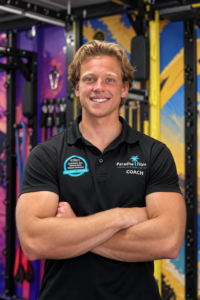
Representing over 30,000 group fitness instructors and personal trainers, AUSactive is Australia’s health and fitness industry’s peak body.
For Ben, who has grown up in the fitness industry, the award represents the culmination of a lifetime immersed in health, fitness and coaching.
From his earliest years he was surrounded by training, coaching and fitness clubs, with his father Paul Brown – an internationally recognised fitness industry leader – coaching and mentoring him across multiple forms of exercise and athletic performance. Ben was also a rising star member of the Gold Coast Suns AFL Academy before choosing to focus on a career in group fitness and personal training and as a club owner/operator.
While still a high school student, Ben was already completing his professional fitness qualifications, becoming accredited as a group exercise leader, fitness instructor and personal trainer. Today, in conjunction with the National Fitness College, he also mentors students working towards their own fitness qualifications.
His education has extended far beyond the classroom. Alongside his father, Ben has worked and trained in fitness facilities around the world and was also a participant in the 50 Sports in 50 Weeks project. The global undertaking saw participants experience 50 different sports across 36 countries, training with and learning from world champions.
The national recognition was a significant night for the broader Paradise Fitness team. Fellow Paradise Fitness coach Angus Richardson was also a national finalist in the Group Fitness category, with Ben a finalist for Personal Trainer of the Year.
Previously recognised as Australia’s Best Independent Fitness Business, Paradise Fitness has continued to grow, this year doubling the size of its facility to meet increasing member demand.
The club has also invested heavily in innovation, including the development of bespoke training equipment and systems. Its HOOX functional training equipment was recognised among Australia’s leading fitness and exercise innovations for 2026 at this year’s AUSactive Awards.
Words: Donna Kelly | Image: Contributed

October 8th, 2026Griffith University student named Rhodes Scholar
Griffith University medical student Ryo Takamizawa has been named Queensland’s 2027 Rhodes Scholar.
Governor of Queensland and Chair of the Rhodes selection panel Dr Jeannette Young, pictured with Mr Takamizawa, announced the award at Government House in Brisbane.
Mr Takamizawa, 24, graduated with a Bachelor of Medical Science in 2022 and is due to complete a Doctor of Medicine in November 2026.
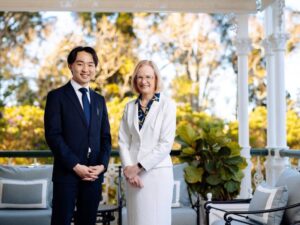
He ranked first in a cohort of 220 students in 2025, received a Sir Samuel Griffith Medical Scholarship and consecutive Griffith Awards for Academic Excellence. He is currently working as a researcher in Griffith University’s Public Health and Economics Modelling Group and as a tutor in anatomy.
Mr Takamizawa will use his Rhodes Scholarship to undertake a Master of Science in Health Service Improvement and Evaluation. “My mission is to help build Australian primary care that protects a person’s place in their community,” he said. “We have never been better at saving people from disease, but far less adept at preserving a person’s place within it.”
Mr Takamizawa said his GP placement in rural Queensland further inspired him to advocate for chronically ill patients. “I want to design and evaluate a risk-adjusted blended funding model for GP-led multidisciplinary care, paying for continuity to prevent deterioration,” he said.
“Medicare mostly pays a GP for each visit – I want to test paying them to look after you over time, with more support for those who need care most. My ambition is to make functional independence a funded responsibility of primary care, rather than an aspiration sustained by exceptional clinicians.”
Mr Takamizawa chairs the board of the Australian Medical Students’ Association and is an elected representative on the Griffith University Council.
Outside of academia, Mr Takamizawa is an accomplished musician, playing piano and cello. He founded the Aurum Health Orchestra, a community organisation of 60 musicians who perform for people in oncology, palliative-care and aged-care settings.
Mr Takamizawa said the scholarship would give him the skills needed to make lasting change in Australian public health. “Oxford’s Health Economics and Policy Evaluation Group specialises in evaluating primary-care policy and its outcomes.
“I could run analyses through the world’s largest primary-care database, while the department’s role as a WHO Collaborating Centre on Primary Health Care would help me distinguish what Australia can adapt from what it should not.”
October 8th, 2026The boat that don’t float – On The Water
One of my favourite memories of the Gold Coast sits somewhere around 1992 or 1993, when I was master and commander of the mighty Maranoa, a fierce pirate vessel that plundered the Broadwater and took what she wanted from all who dared cross her bow.
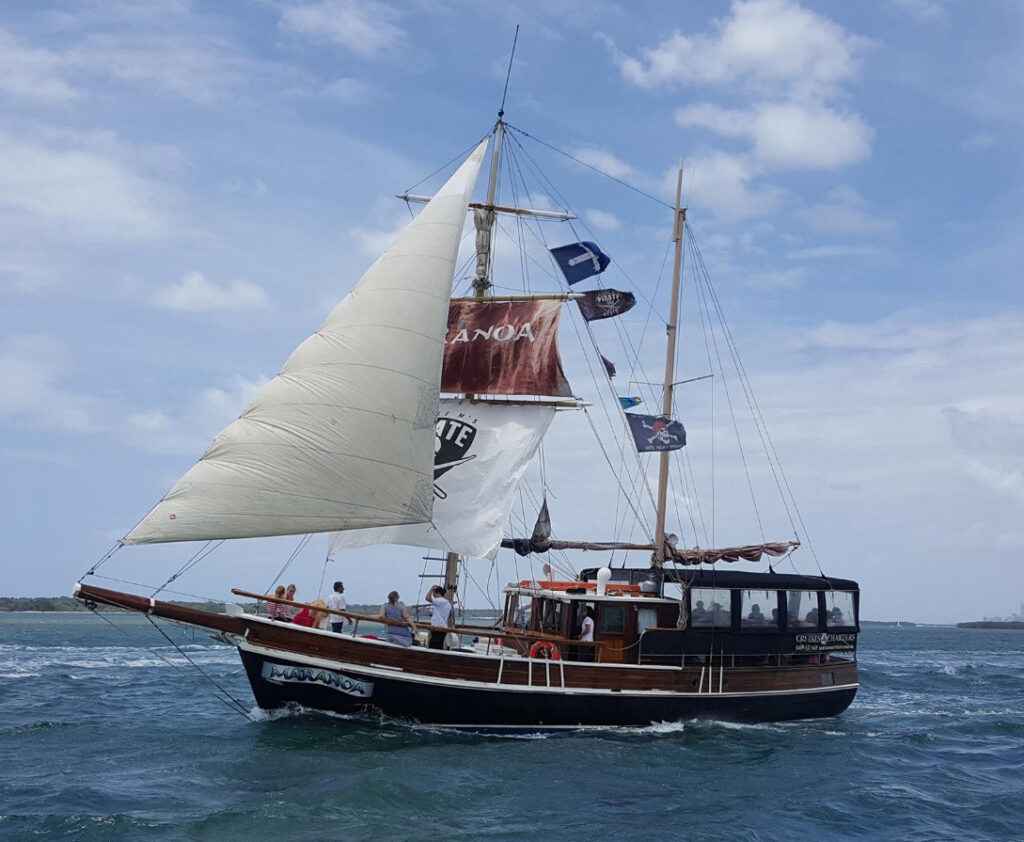
We fought tooth and nail against every other vessel on the water and left a trail of terror in our wake. That’s what I tell the youngsters, anyway.
The truth, as it usually is, is slightly more prosaic. I was the skipper aboard the Maranoa, a brigantine, a two-masted sailing vessel with square sails on the foremast and a gaff mainsail on the stern.
Originally built in 1964 in Tasmania from Huon pine, she was 15.85 metres (52 feet for you old buccaneers) and carried something in the order of 35 horses to spring yourself back into the berth at Southport Yacht Club without too much embarrassment.
She took around 40 passengers, who boarded sober and disembarked decidedly wobbly. The vessel was fitted with an explosive cannon that we’d stuff with gunpowder and wads of toilet paper (luckily it was long before Covid) before firing at the other vessels in the tourism flotilla making their way to Tipplers for lunch.
In those days Tipplers was buzzing with parasailing, aeroplane rides, jet ski hire, banana boats and even a floating helicopter platform for scenic flights over the coast.
For a young bloke fresh off the boat from New Zealand, it was an absolute blast. I was living at Yachting Towers (party central) which overlooked the yacht club, so I didn’t even need a car. Life, as they say, was good.
I do remember one afternoon when a summer storm came out of nowhere, one of those mini tornadoes the coast occasionally produces without warning or apology.
The wife-to-be was up at Movie World with a van full of Japanese tourists, which was her job, as a Japanese-speaking tour guide. She wasn’t abducting them. She ended up sheltering under a bridge, which turned out to be the smart call, saving the HiAce from hail damage.
The rest of us weren’t so lucky, with most of the flotilla getting caught out around Sovereign Islands when the storm dropped down from Coomera. I had only the jib out, which turned out to be just enough sail to cause serious trouble.
The wind laid us over, screaming in from the west, and for a moment things got genuinely interesting. I grabbed a knife, cut the sheet, spilled the air from the sail and motored her head to wind. With 35 horses galloping harder than they’d ever had in their lives, she steadied. I breathed.
And then, almost immediately, it came at us from the east. Once again I squeezed every last inch out of that little engine and went head to wind again, holding her steady. As quickly as it had arrived, it was over.
The storm moved on, the water flattened, and I looked around to find most of the tourist fleet sitting on the mudbanks, being towed out by speedboats. We limped back to the Sundale Bridge dock, put the passengers ashore, and I went home to Yachting Towers and poured a very large drink.
Fast forward to a few months ago, when I spotted my beautiful old friend hauled up onto the hardstand at The Boat Works in Coomera, dragged ashore like a harpooned whale.
She’s the centrepiece of the Kokomo Kitchen and Bar now, which I have to admit suits her rather well. She was always good at setting a scene, and a fictional tropical island getaway is very much in her wheelhouse. I think the Beach Boys would approve.
Something had to be done with her eventually, and at least this way she’s still telling stories, even if they’re someone else’s now. But there’s something quietly melancholy about standing there with a cold drink in your hand, looking at her weathered hull slowly returning to the earth, while your own salad days do much the same. She was a good ship. I was lucky to command her.
Images: Contributed & Kyle Barnes